
Introduction
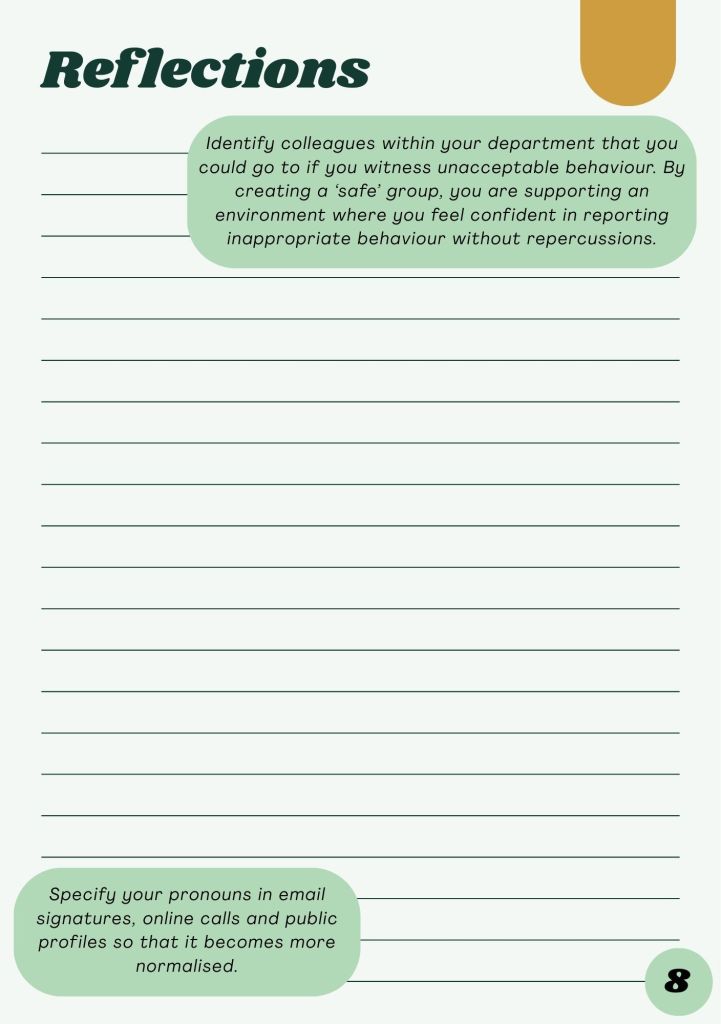
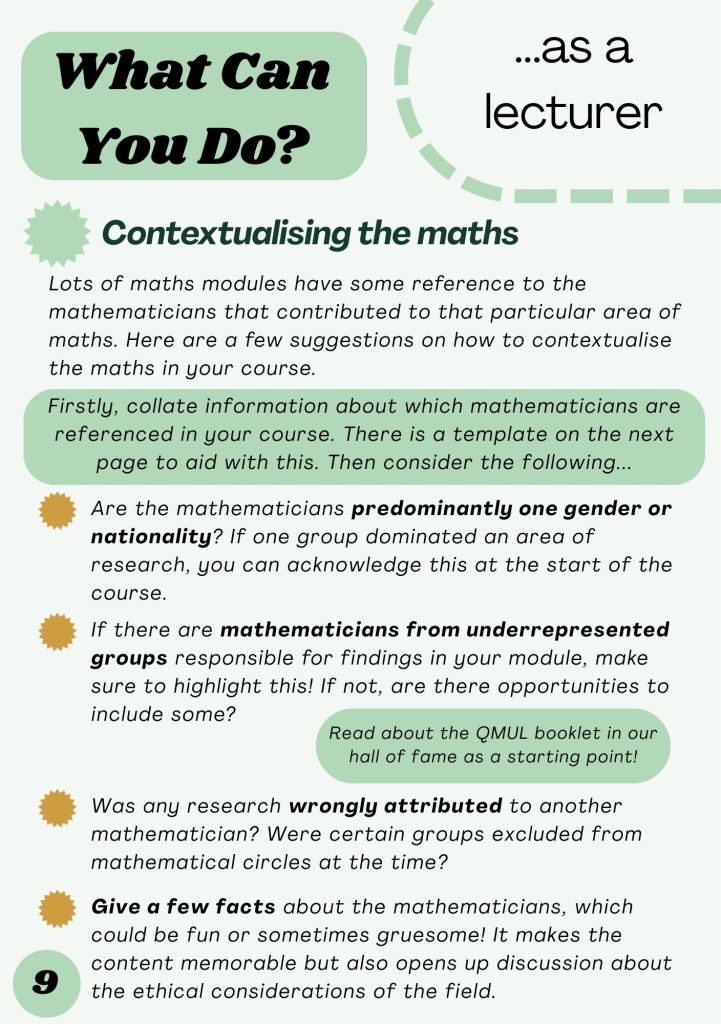
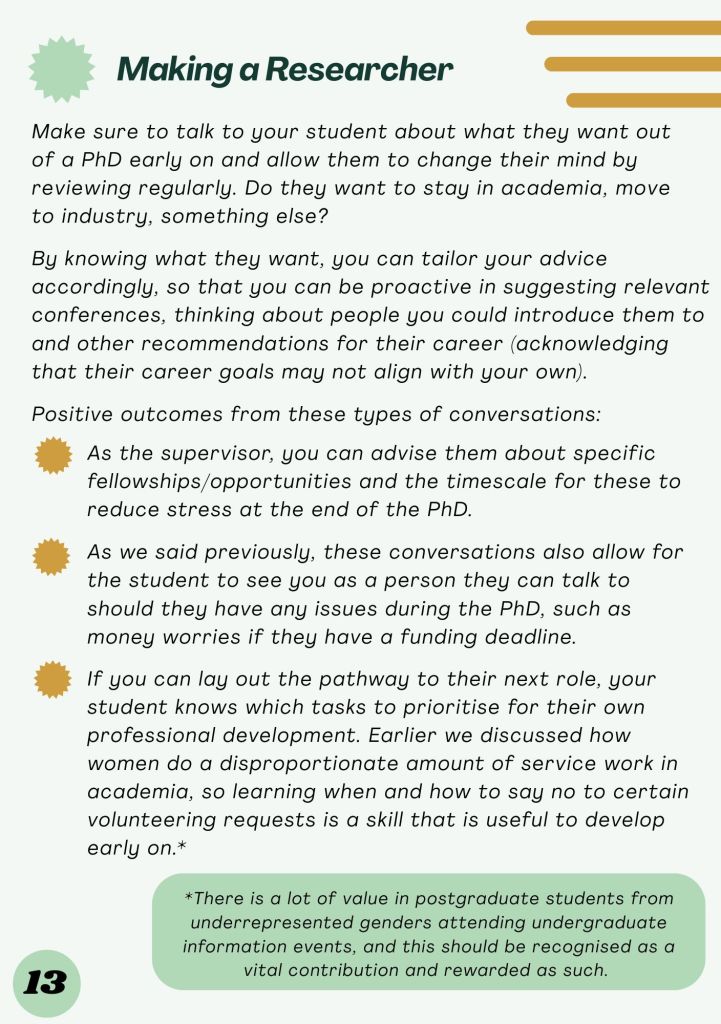
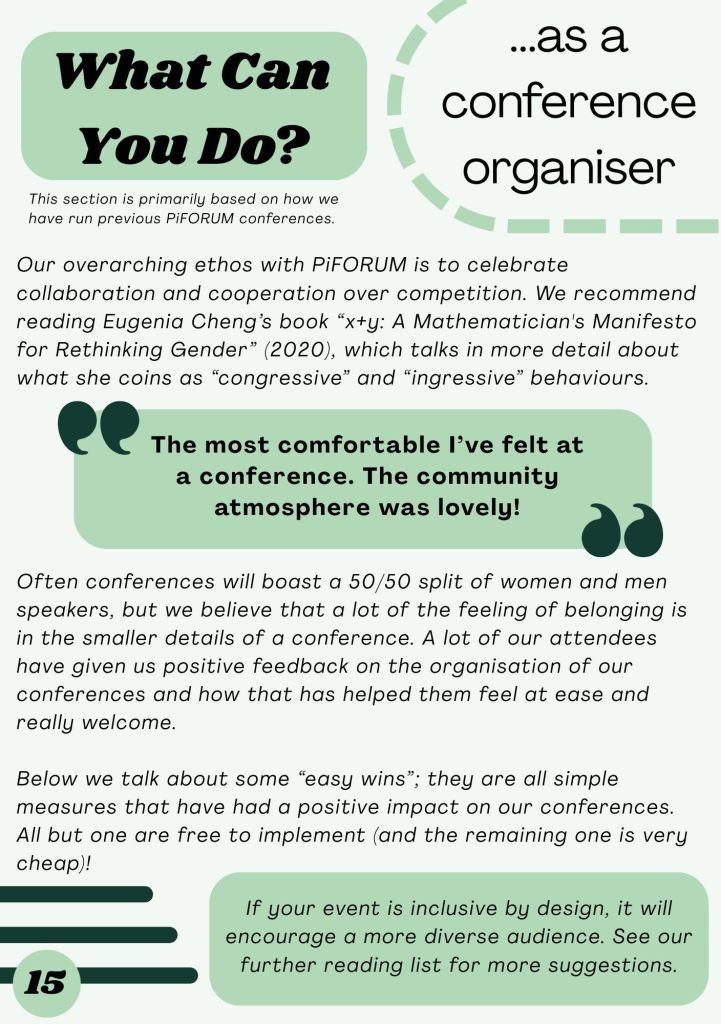
The aim of this booklet is to provide practical guidance for those wishing to do more in their department to support gender diversity. It is not an exhaustive list, and we hope that this is a starting point for most to actively continue their learning about what they can do.
The advice has come from multiple sources: experience as a Piscopia co-lead, the “How to train your allies” group, Piscopia members and several academics from across the UK. The aim is that this booklet be made available online and to seek funding to print physical copies for distribution. If you would like to print physical copies, please get in touch with us as we can you send the professional printing version (with bleed and crop marks) and we would also like to keep track of the impact this booklet has had! Similarly, if you find this booklet helpful or have recommendations for future versions, please email us:
howtotrainyourallies@gmail.com and piscopiainitiative@gmail.com
Please appreciate that both initiatives that worked to create this booklet are made up of volunteers and so our response may be slow.

The booklet
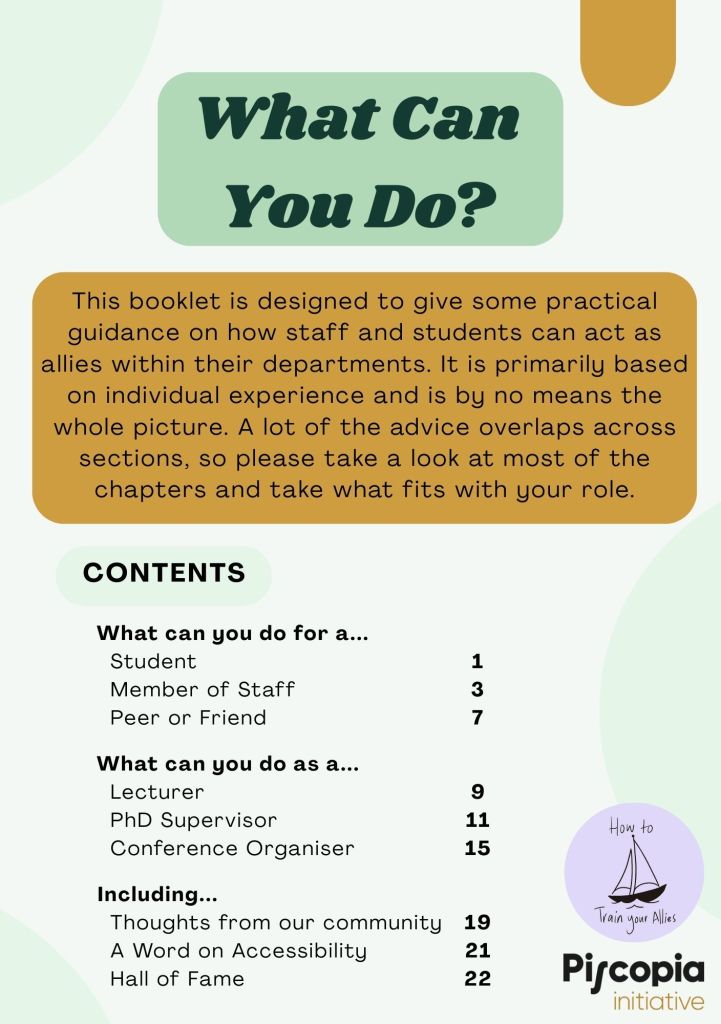
Contents
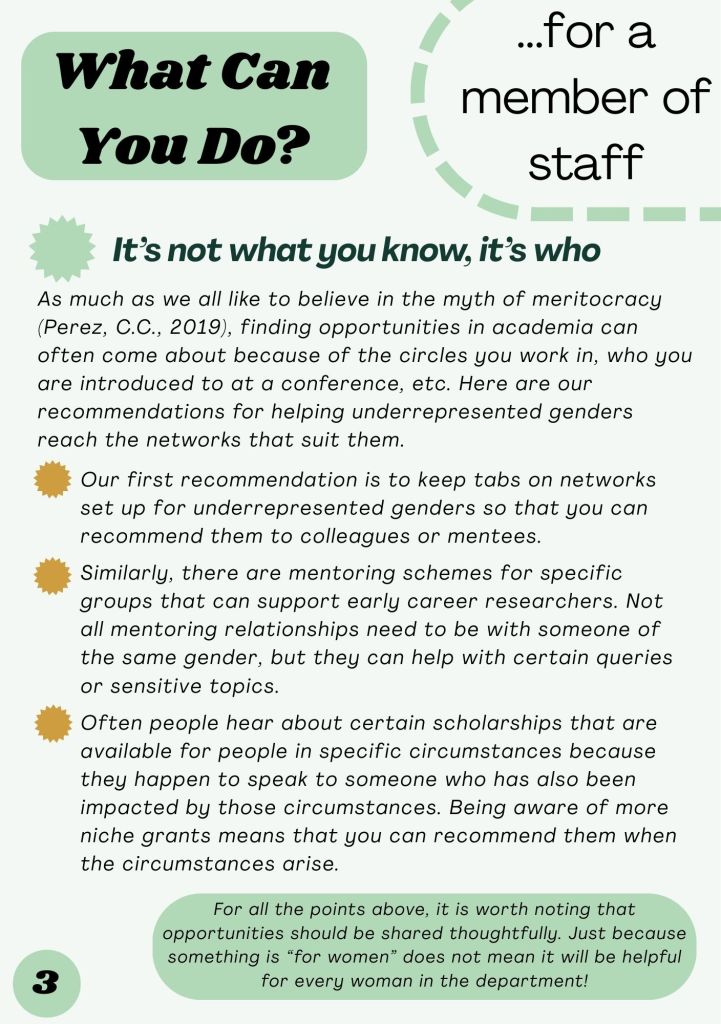
- What can you do for a…
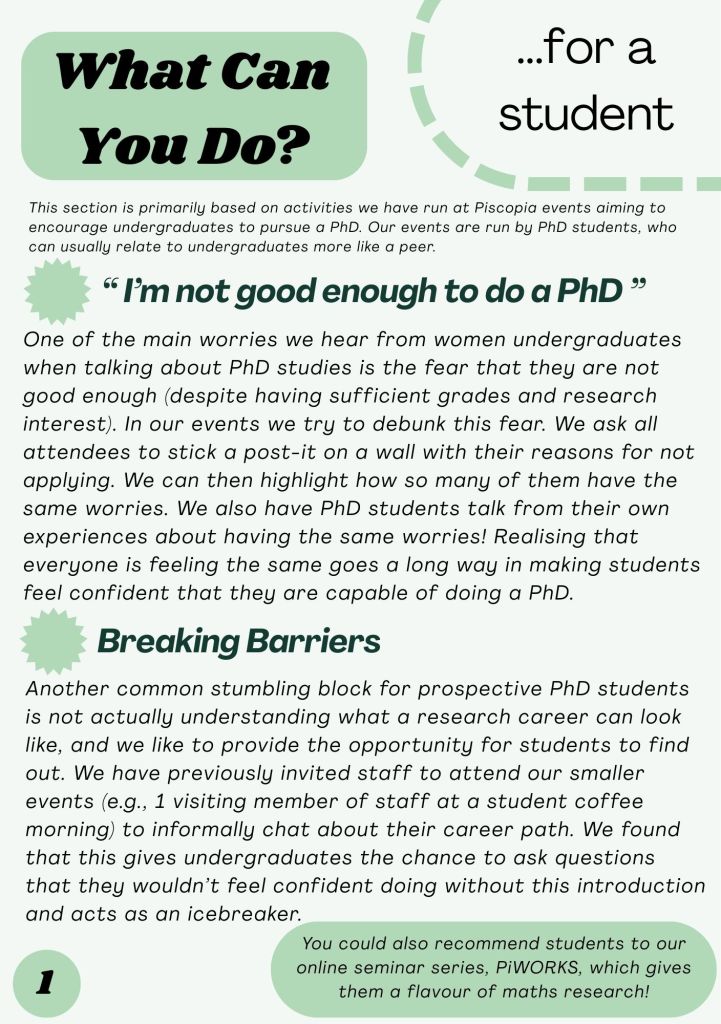
- Student
- Member of Staff
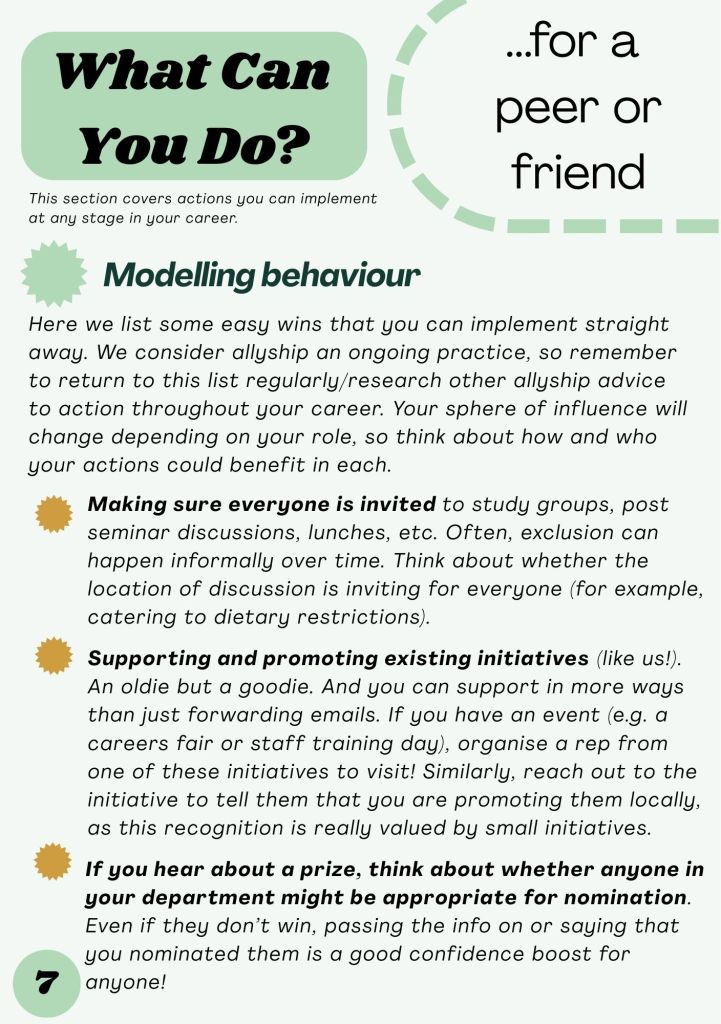
- Peer or Friend
- What can you do as a…
- Lecturer
- PhD Supervisor
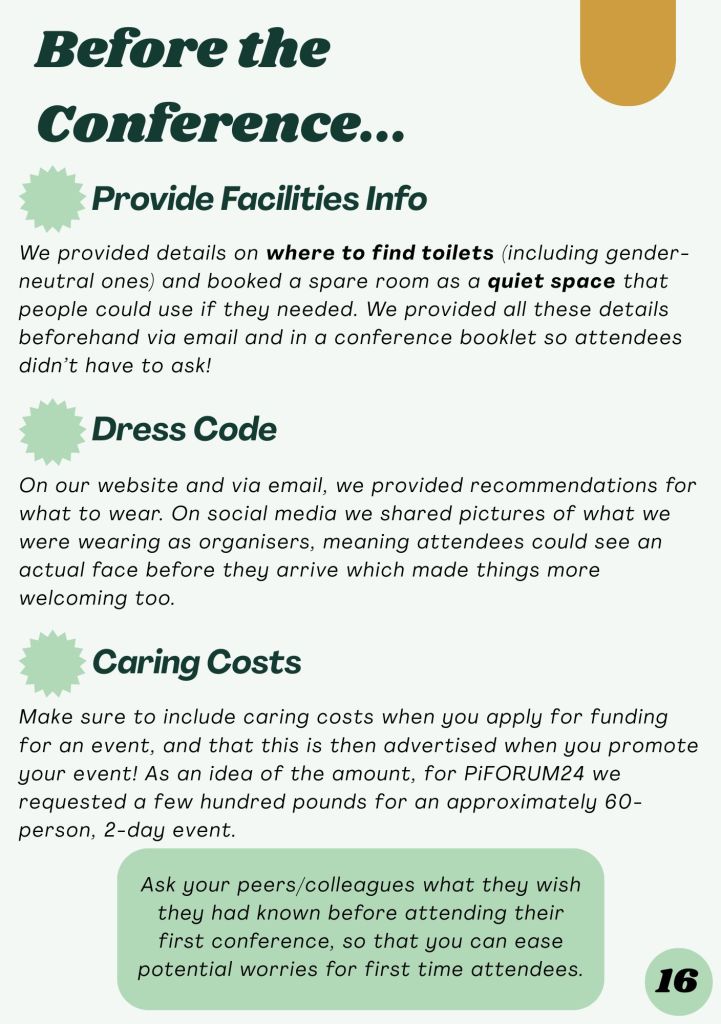
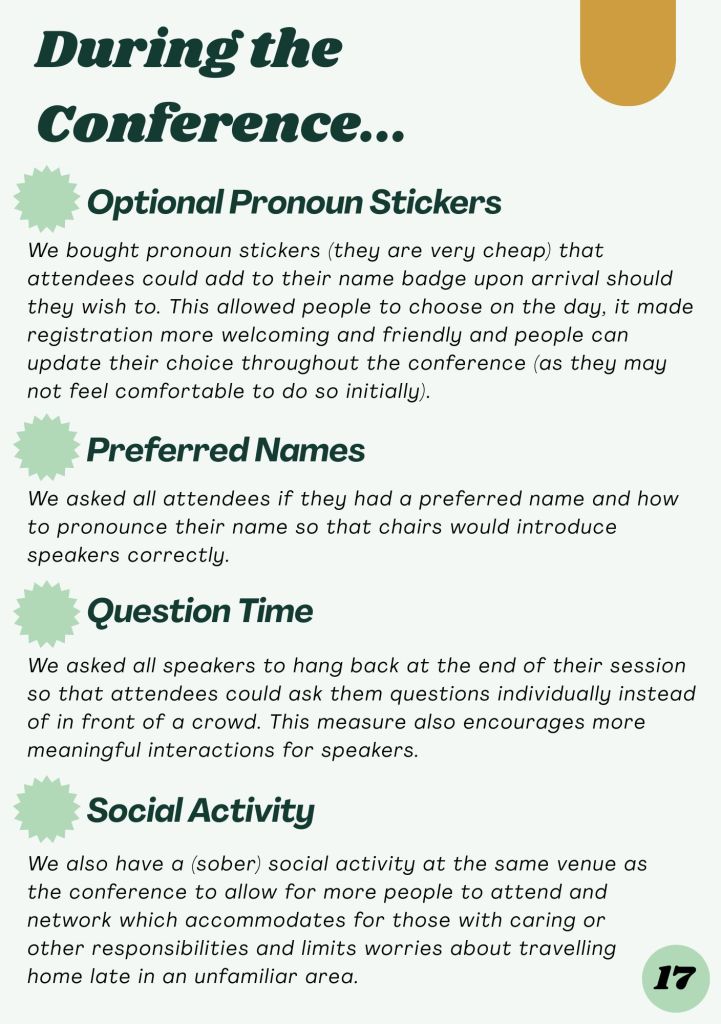
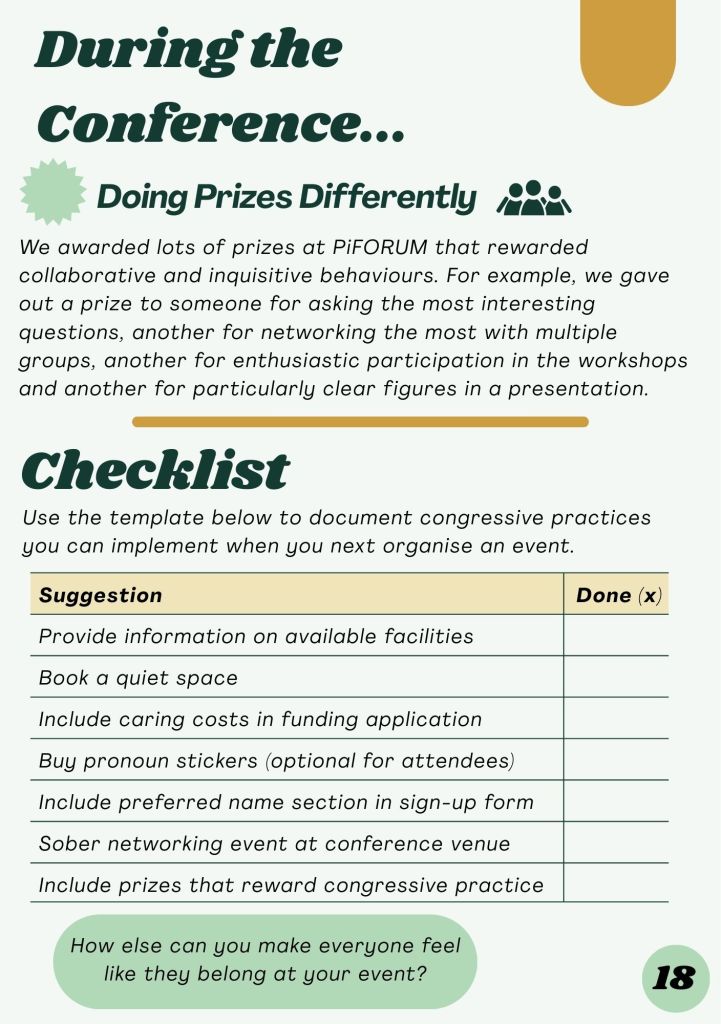
- Conference Organiser
- Including…
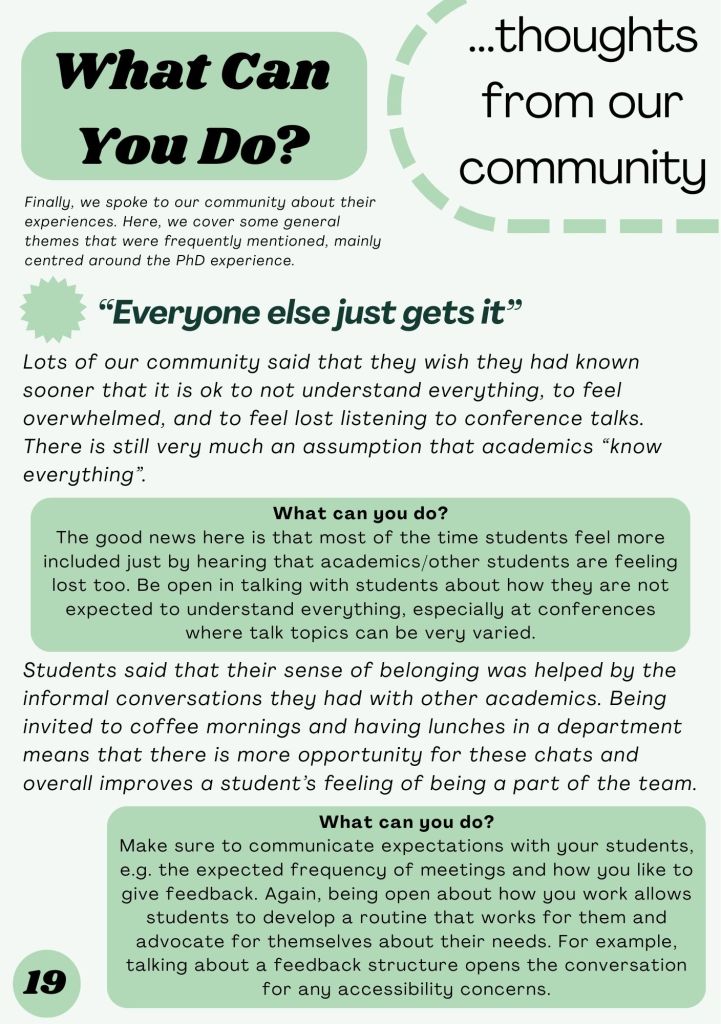
- Thoughts from our community
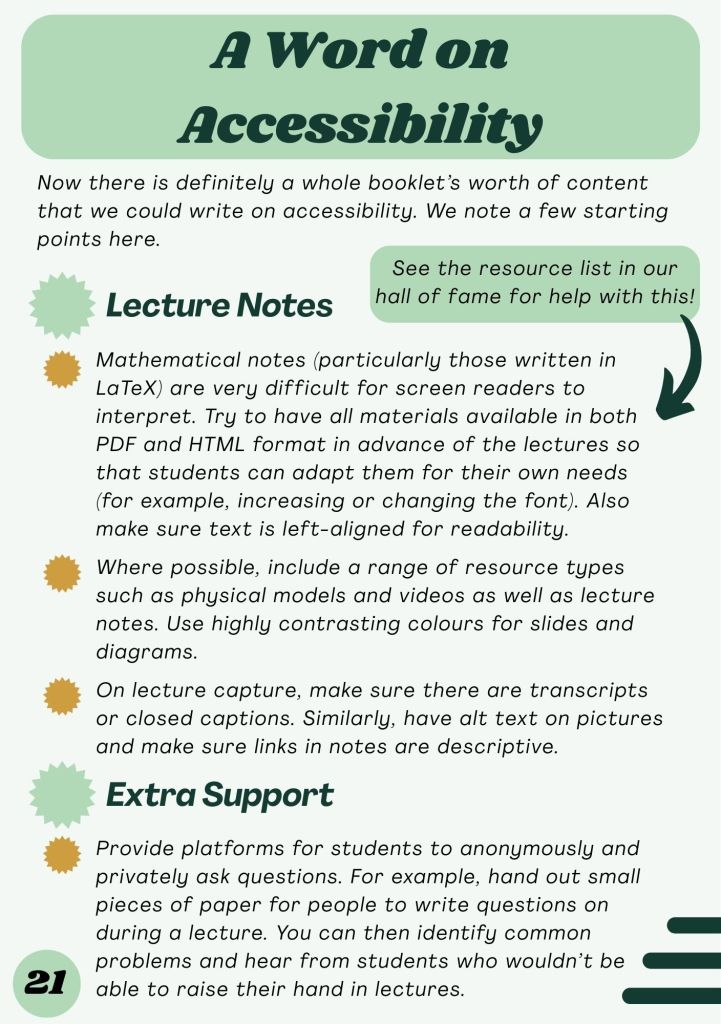
- A Word on Accessibility
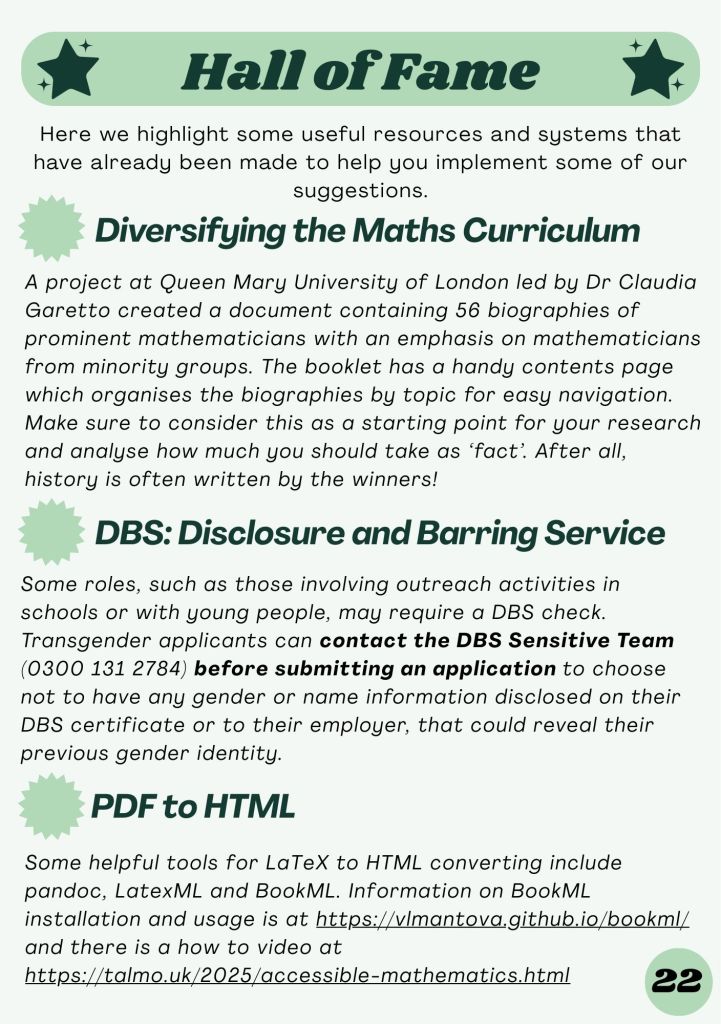
- Hall of Fame






Further Reading
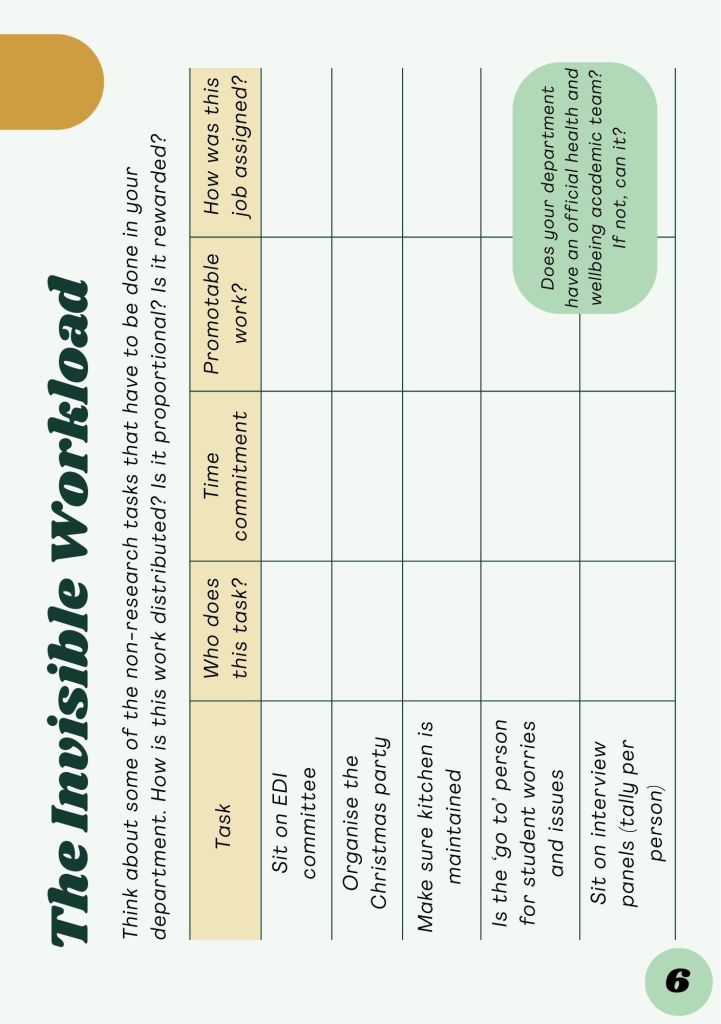
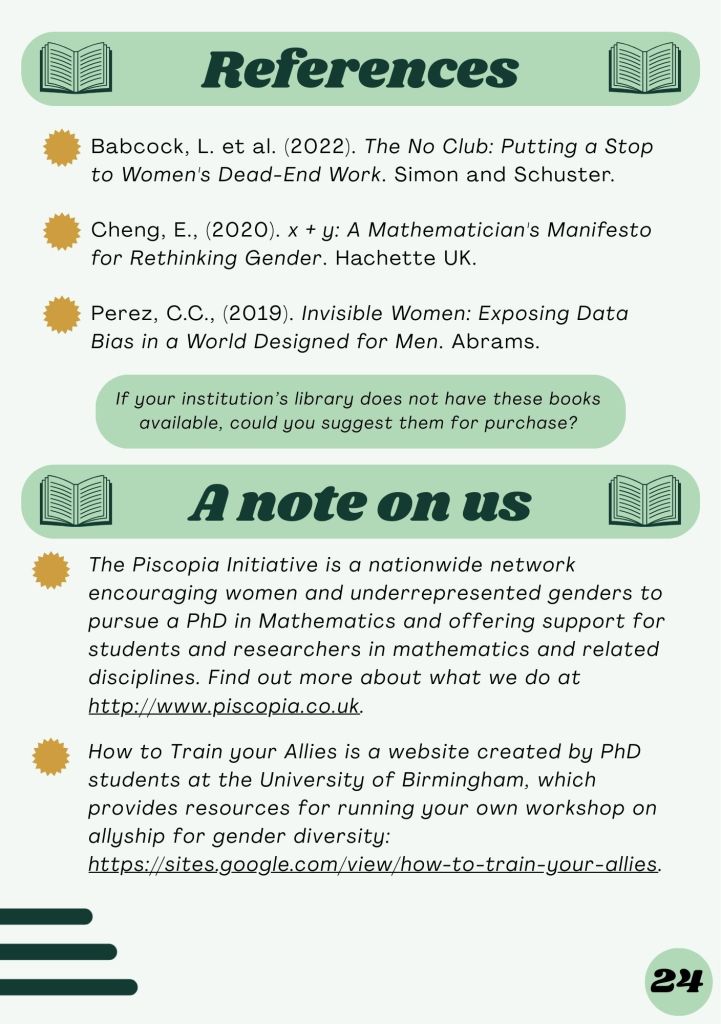
“The No Club: Putting a Stop to Women’s Dead-End Work” by Linda Babcock, Brenda Peyser, Lise Vesterlund and Laurie Weingart.
“x+y: A Mathematician’s Manifesto for Rethinking Gender” by Eugenia Cheng
“Invisible Women: Exposing Data Bias in a World Designed for Men” by Caroline Criado Perez. There is also a podcast called “Visible Women with Caroline Criado Perez” which talks about ways to close the gender data gap.
Useful Resources
- The Queen Mary University of London project on Diversifying the Maths Curriculum. The EDI Resources available here include a booklet of biographies and posters to give visibility to engineers and scientists from under-represented groups.
- Disclosure and Barring Service Sensitive Team (0300 131 2784) – transgender applicants can talk to the team before submitting an application to choose not to have any gender or name information disclosed on their DBS certificate or to their employer, that could reveal their previous gender identity.
- Some helpful tools for LaTeX to HTML converting include pandoc, LatexML and BookML. We provide links to BookML installation and usage and a how to video.
- The “How to Train your Allies” website, with resources for running your own workshop on allyship for gender diversity.
Conference Organisation:
- The LMS has a page on “Advice on Creating a Positive Environment at Events” which covers broader accessibility themes specifically for events.
- Talking Maths in Public also has a code of conduct for events.
- Newcastle University has an event accessibility checklist.
Events & Networks:
- PhDYourWay – Find out about PhD opportunities in a diverse maths community!
- The QED Network – A community-led effort by mathematical staff and PGRs to connect and support LGBTQIA+ members of the UK mathematics community.
- The History for Diversity in Mathematics Network – Aims to build a network around using history of mathematics to promote equality, diversity and inclusion in the mathematics curriculum in UK HE.
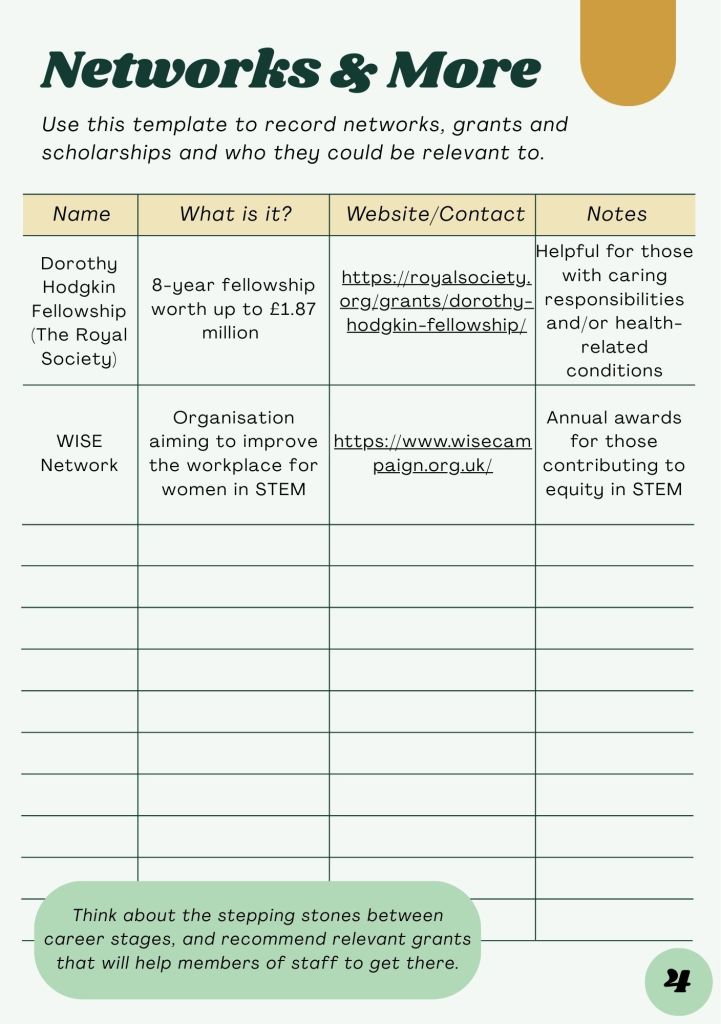
- WISE Network – Organisation aiming to improve the workplace for women in STEM. They host annual awards for those contributing to equity in STEM.
Funding:
- Variety of grants listed on the LMS webpage for early career researchers including
- Undergraduate Research Bursary – funds an undergraduate to spend time over the summer working with an academic
- Postgraduate Conference Scheme – funds postgraduates to organise conferences for postgraduates
- Early Career Fellowships – funds 6 months post-PhD
- Travel funding also available for various levels
- LMS Committee for Women and Diversity in Mathematics – Grants to Support Equity, Diversity and Inclusion
- Inclusion and Diversity fund to support events that promote EDI
- Caring Supplementary Grants (maximum £200)
- Grace Chisholm Young Fellowships (1 year, maximum award £2000)
- Emmy Noether Fellowships (1 year, awards between £2000 and £10000)
The Royal Society’s Dorothy Hodgkin Fellowship (for those with caring responsibilities and/or health-related conditions, 8 year fellowship worth up to £1.87 million)
Do you know something else that should be on this list? Please get in touch with us at piscopiainitiative@gmail.com!
Licensing
The material found on this page is distributed under the Attribution-ShareAlike 4.0 International (https://creativecommons.org/licenses/by-sa/4.0/).
This license requires that reusers give credit to the creator. It allows reusers to distribute, remix, adapt, and build upon the material in any medium or format, even for commercial purposes. If others remix, adapt, or build upon the material, they must license the modified material under identical terms.
BY: credit must be given to the creator.
SA: Adaptations must be shared under the same terms.
Page last updated: 27/09/2025
 piscopia.co.uk