

The Piscopia Initiative – a community for women and underrepresented genders in mathematics
Location: University of Edinburgh, Bayes Centre
Date: Wednesday 2nd September 10AM – Thursday 3rd September 4PM
We are pleased to say that PiFORUM26 was a huge success! We had 50 attendees across a range of career stages and mathematical disciplines. We had four wonderful keynote talks (details below!) and a diverse range of contributed talks. See below for our conference photo!
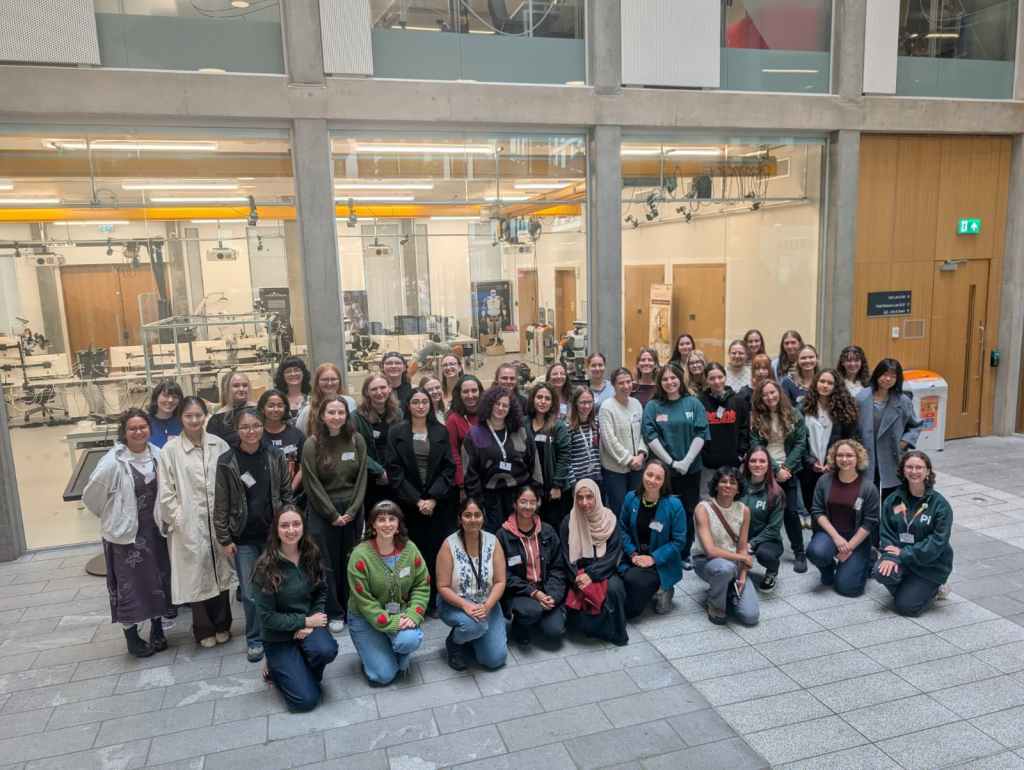
Each year, we welcome everyone to attend including undergraduates, postgraduate students considering a PhD, PhD students, postdocs and early career researchers. It’s a great opportunity for anyone to gain experience presenting their research, be inspired by current PhD work, find out more about doing a PhD and life after a PhD! You can also expect fun social activities, a poster session, interactive talks and prizes.
See below for the conference schedule and titles/abstracts for the keynote talks.
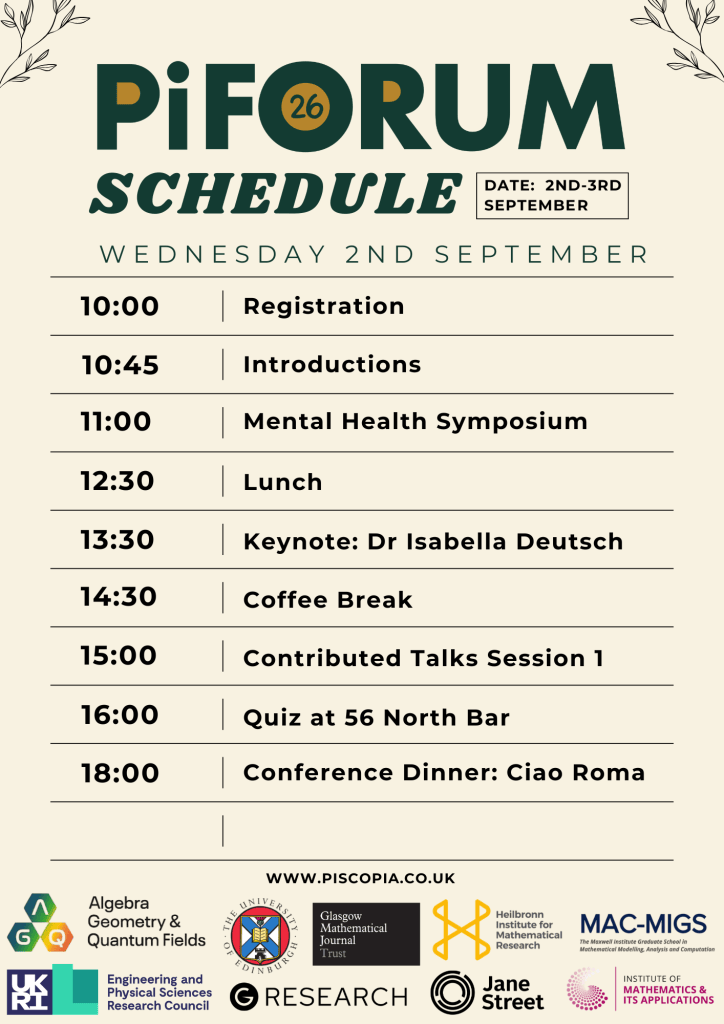
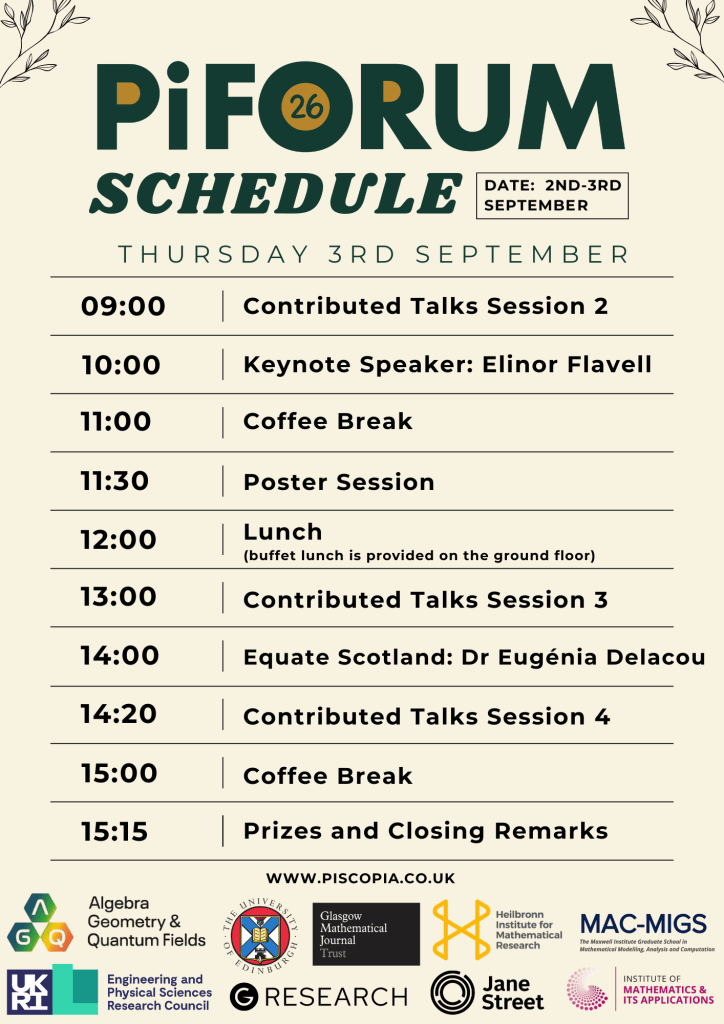
Mental Health Symposium: Shared Experiences
This year, we are excited to include a mental health symposium, with speakers Ashleigh Ratcliffe (PhD student at the University of Leicester and Piscopia Co-lead) and Jenny Power (Innovation Research Associate at Heriot-Watt University).
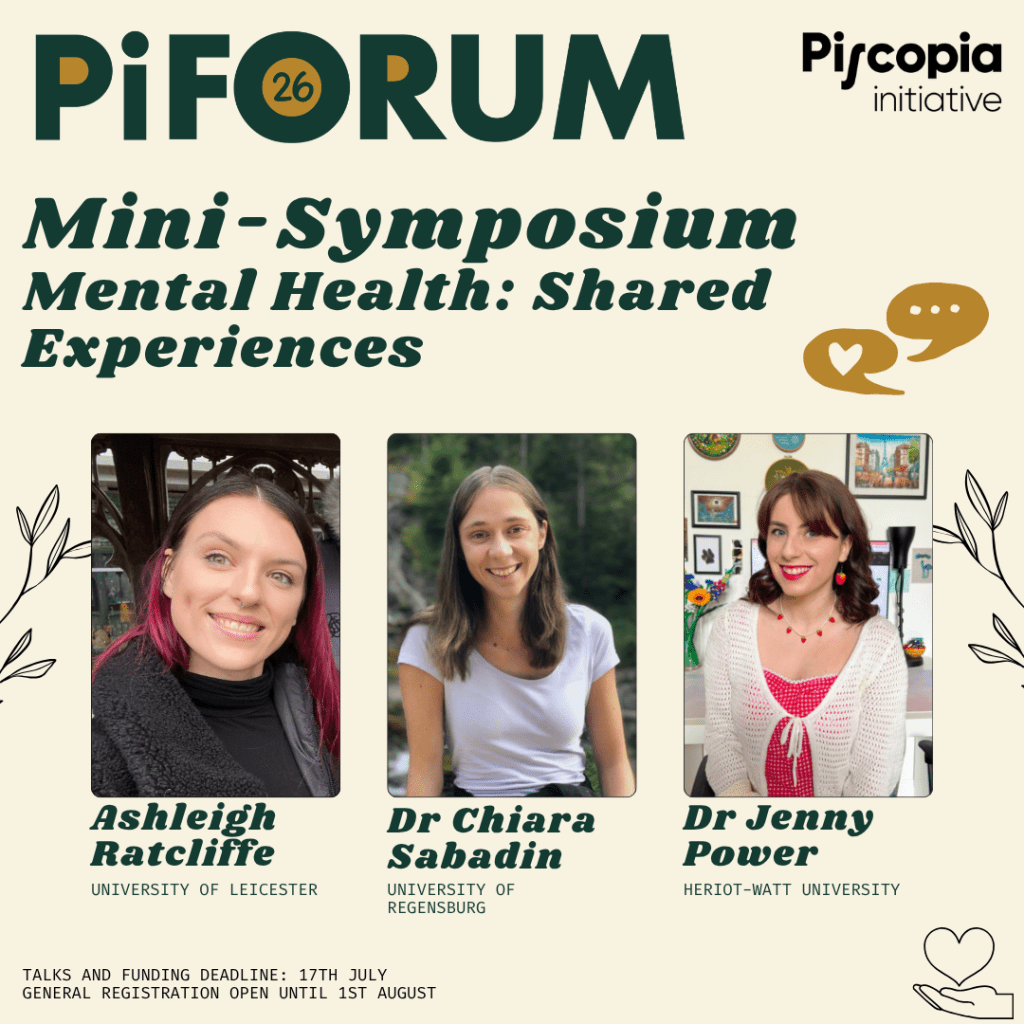
Speaker 1: Ashleigh Ratcliffe, University of Leicester
Title: Behind the achievements
Abstract: Success is not linear, but the successes are all we tend to see. In this talk, I reflect on my PhD journey, sharing not only the successes, but also the challenges behind the scenes. I discuss how I navigated these difficult moments with the hope that this encourages more honest conversations about the realities that shape our personal and professional lives.
Speaker 2: Dr Chiara Sabadin, University of Regensburg
Title: Gender Diversity and Inclusivity in Mathematics Departments
Abstract: Should gender diversity and inclusivity in maths still be discussed nowadays? Based on a survey made in 2025 among maths students and researchers throughout the world, the talk will provide powerful first-hand experiences on various topics.
Speaker 3: Dr Jenny Power, Heriot-Watt University
Title: PhADHD: the mess, the best, and all the rest
Abstract: Doing a PhD is difficult, but throwing ADHD into the mix comes with its own set of challenges. In this talk, I will share my experience of doing a PhD with ADHD, and how I learned to work with my brain rather than against it.
Alongside my personal experiences, I will explain what actually ADHD is, discuss some common misconceptions, and share practical strategies that I have found useful throughout my PhD.
My hope is that sharing my experiences will help others feel less alone, encourage conversations about neurodiversity in academia, and show that there is no single way to be a successful PhD student.
Keynote Talks

Speaker: Dr Isabella Deutsch
Title: Nobody falls in love with a probability distribution. Theory and application of science communication
Abstract: Nobody falls in love with a probability distribution, which is a problem, as this is roughly what I do for a living. Therefore it is up to me to get people excited about my work! I’ll share some thoughts on how science communication has been a key feature in all stages of my career so far. Giving guided tours at a history museum taught me to adapt to my audience. Co-founding the Piscopia Initiative, I learnt to focus on the “why”. Now at a tech startup I value clarity above anything. This brings us to the “applied” part of this talk: my 2024 Fringe show “All statistics are wrong!”. Join me for a whirlwind tour through the wonderful world of statistics, discover why even Bill Gates doesn’t have a 100% chance of getting a mortgage, and why statisticians insist on trying to answer questions that don’t have an answer. I will convince you that you need Bayesian statistics if you want to fall in love (with a human, not a probability distribution).

Speaker: Elinor Flavell
Title: The start of University Education for Women in the UK
Abstract: 1878 was the first year that women could graduate from the University of London, 1892 was the first year that women could graduate from the University of Edinburgh and it wasn’t until 1948 that women could officially graduate from the University of Cambridge (although they had been studying there since 1869). This talk will be a brief overview of the mathematical university education available to women in Victorian England and Scotland. What mathematics did they study? What universities did they study at? And what were the next steps available to them after their degrees?
Testimonials from PiFORUM25 Attendees
“I learnt a lot about how to get into research/PhDs and summer research internships that are available to me – including meeting people who had completed these. Where to find out about these programmes.”
“Mock interviews were amazing and so was the careers talk. Loved the diverse mathematician posters in the quiet room. Great opportunity for people to give early career presentations in a less intimidating atmosphere.”
“The research talks were great! The atmosphere was super welcoming and I really lived the ample social and networking time.”
“”It was very well run, and has a brilliantly friendly and supportive atmosphere. Really fascinating to hear from people who have built different kinds of careers in maths.”
“The research talks were great! The atmosphere was super welcoming and I really lived the ample social and networking time.”
“[I gained an] increased sense of belonging in the mathematical community”
Thank you to our sponsors







We are grateful for the financial support from the Heilbronn Institute for Mathematical Research (HIMR) and the UKRI/EPSRC Additional Funding Programme for Mathematical Science.
We are grateful for the financial support from the Glasgow Mathematical Journal Learning and Research Support Fund
Page last updated: 08/09/2026
 piscopia.co.uk